|
Bonnie D. Parkin
Relief Society General President
Address given at the Fall 2004 Open House
Incomings
My message to you six months ago was titled “Welfare-Free Zone? Look Again.” I hope your application of the principles taught has resulted
in welfare being better understood and practiced and that more of our sisters and their families are enjoying the blessings of the fast. Sisters, what have you found as
you have been looking? I hope you’re all saying, “We have a great ward. We have identified many welfare needs, we know our bishop’s vision of welfare for our
ward, and we are applying the principle of the Lord’s storehouse.” How many of you know your priesthood leader’s vision of welfare?
It’s back to school time. Can you account for every one of your young adult sisters? Do you know where they are? If they are not in your
meetings, do you know where they are attending church? You need to be able to account for every young adult sister in your ward. This is more than a statistical
reporting issue—it’s an issue of having these women know that we know their names and are concerned for their success and well-being. Isn’t that a part of our
welfare responsibility? Our young adult sisters need to feel part of Relief Society and, through our efforts, need to personally experience that charity never faileth!
On a similar note, as a stake Relief Society presidency, is transition one of your priorities? Do you know how many new young adult Relief
Society sisters will join you in the coming year? Have you encouraged all of your wards to assign a counselor to oversee transition? If you are a ward Relief Society
president, have you assigned a counselor over transition? Are you working with your Young Women counterparts to help make the move from youth to womanhood
something they will anticipate? Don’t overlook the March 19,
2003, First Presidency letter on transition. Sisters, we need to extend our best efforts to helping all of our sisters belong to Relief Society. And if we can create
this sense of belonging while they are young, they will not miss years of fellowship in this great sisterhood.
In Helaman 6:3 it describes what can happen: “And they
did fellowship one with another, and did rejoice one with another, and did have great joy.”
 
Introduction
Recently, a young Relief Society sister responded to the query “How has Relief Society blessed your life?” with the following:
“Simple acts have meant the world to me: someone to sit next to on a lonely day, a lesson taught with the Spirit that answers questions on my mind, and beautiful
music shared by the ever-present, talented sisters.” Our meetings should be places of refuge for the lonely and spiritual fountains for thirsty, questioning minds.
As a worldwide sisterhood of women who have taken upon ourselves the covenants of the gospel of Jesus Christ, if there is anything that we
share, it is the responsibility to teach. We do it formally, as well as informally. “We teach as parents, . . . daughters, . . . wives, . . . and sisters. We teach as Church
leaders, [Relief Society] teachers, . . . and visiting teachers. We also teach as coworkers, neighbors, and friends.”1 Without exception, in the gospel of Jesus Christ, each of us is a teacher.
 
Why and What Do We Teach?
“The mission of the Church is to help individuals and families come unto Christ and obtain eternal life.”2 The home is the central place where we teach one another the doctrine of the kingdom, but the home is supported by the
teaching and the learning that takes place at church.3 As Relief Society leaders and teachers, we can help
accomplish this mission through effective gospel teaching.4 In Relief Society we teach the teachers—we teach
mothers, future mothers and nurturers of God’s children.
As stake and ward Relief Society leaders, one of your significant responsibilities is to oversee teaching so that it supports and strengthens
home and family. When effective teaching occurs in Relief Society, sisters will be spiritually uplifted and better able to apply gospel principles in their lives. I believe
effective teaching includes knowing your sisters, relying on the Spirit, and allowing the sisters to feel the love of the Lord in their lives. Sisters, this is our charge!
Let’s pretend for a minute that I am your ward Relief Society president. It’s the first Sunday of the month. All of you know that first Sunday
lessons are taught by members of the presidency and provide opportunities for you to teach the gospel, discuss the purpose of Relief Society, and review counsel from
priesthood leaders.5 I encourage you to use the First Presidency’s messages from General Relief Society
Meetings. These are the words of the prophets given directly to women. As you’re directed by the Spirit, you’ll be blessed to know which local needs and concerns
need to be addressed in your first Sunday meetings. Here’s how I might begin:
“Sisters, it’s wonderful to be with you today. As I’ve counseled with the bishop, we determined our ward has the need for a first Sunday
lesson on improving gospel teaching. I’ve looked forward to the opportunity to meet with you and share my vision of what I’d like to have happen when we meet
together each Sunday. I’d like our Relief Society room to be filled with the Spirit. Everything we do and say should invite the Spirit of the Lord. I’d like us to discuss
doctrine, and hope we will gain new gospel knowledge and insights. I’d like this to be a safe place where we can share our thoughts, feelings, and ideas. I know that
when we come to know and understand each other’s hearts, we’re changed.
“As a presidency, we’ve given our teachers the charge to help class members participate in the lesson. As sisters, we need to hear each
other’s voices. Such participation will enable us to teach and edify one other. It will also invite the Spirit into our meetings. Elder Gene R. Cook has taught that ‘the
major role of a teacher is to prepare the way such that the people will have a spiritual experience with the Lord.’6 I know we learn more when we are involved in the learning, and I believe we will be better able to apply and live gospel
principles.7 By having fruitful discussions in Relief Society, we can learn ways to make family home evenings
and family scripture study more effective. I believe that as our homes are filled with active discussions and honest communication, we will be better able to respond to
the perilous times in which we live.
“The unifying power of sharing begins on Sunday. While our lesson should promote thoughtful gospel application, it shouldn’t always be a
lecture—we need discussion. No teacher should give 'her' lesson to a group of silent sisters, because the lesson is 'our' lesson. We’ve asked our Relief Society
teachers to devote their efforts to preparing to lead a discussion rather than creating magnets! When a teacher creates a safe place to share feelings, the Spirit unites us
in powerful ways. 'By union of feeling we obtain power from God.'8
“In order to contribute to our discussions, we need you to bring your scriptures, your Teachings of Presidents of the Church books, and your conference issue of
the Ensign or Liahona. Please read the lesson before you come each Sunday, make notes in the margins about your impressions, and come prepared to add your
thoughts and insights to the discussion. Reading and discussing the scriptures and the words of the prophets will help us feel the influence of the Spirit and gain a
testimony that the word of God is good.9
“Sisters, why do we come to Church? I promise you, it’s not just to sit. We all need to be committed to improving the quality of teaching and
learning that occurs in our Relief Society. We desire to hear from each other. Your perspectives and life experience enrich our discussion and bolster our faith. As
sisters meeting together, we need to enjoy the opportunities to discuss the principles being taught. It is our gospel learning time as a sisterhood. Relief Society Sunday
meetings are a place where sisters hear each other’s voices and are comfortable expressing their thoughts and feelings. Good teachers recognize how often they are
taught by their students. One teacher described her learning from a class member in these words:
“'One Sunday as I was teaching a Relief Society lesson in a warm and intimate setting among sisters I knew and loved, I referred to the
parable of the ten virgins and spoke of the sorrow which comes when lamps are empty. One of the class members, knowing I was mourning over an inactive child,
used the parable to teach the teacher. She raised her hand and said, “Even for the foolish among us, the lamp is never totally empty. There is always a drop or two left
inside.”10 Her comment, given with such love, provided renewed hope for me, which I continue to feel.’
“I love the scripture in Matthew 18:20, which reads, ‘For where two or three are gathered together in my name, there am I in the midst of them.’ As we join together, we invite the Spirit. Sisters,
when the Spirit is present and the doctrine is taught and discussed, both teacher and learners will be enlightened and lifted. I testify that if every teacher will keep the
last five minutes of each lesson to summarize and bear testimony of the truths that have been taught, the power of the Holy Ghost will carry it into each of your
hearts.”11
If this were your first Sunday lesson, what would you do? As Relief Society leaders, what is your vision for Sunday lessons? I believe if a
Relief Society presidency is concerned about teaching, they’ll do everything it takes to improve it, including giving a first Sunday lesson that shares a vision and
expectation for all Relief Society sisters—both teachers and learners. I invite you to consider using the first Sunday in January to teach the introduction section of the
Teachings of Presidents of the Church: David O. McKay book. I believe when sisters know that the First Presidency and Quorum of the Twelve Apostles have
established a curriculum that they feel will help Church members deepen their understanding of gospel doctrine and draw closer to our Savior, teaching will
improve.12
 
What Are the Qualities of an Effective Teacher?
One stake Relief Society president talked to sisters from various wards and asked them to share what they liked about Relief Society
teachers in their ward. The stake Relief Society president then shared these responses in a stake leadership meeting on teaching.
Listen to what these sisters shared. What characteristics made these teachers memorable?
- “Shirlee does a great job. She teaches the doctrine in the lesson and personalizes the message to make it useful and relevant to today. I like the fact that she
really uses the material in the study guide rather than looking for other materials, as some teachers tend to do. She uses Heber J. Grant and his words to teach
us.”
- “Luann is loving and accepting, which makes for a comfortable, nonthreatening learning environment. Sisters feel accepted and motivated to do better, without
the guilt factor. She helps sisters feel able and encouraged versus feeling incapable and discouraged.”
- “Carol’s lessons are great. She is comfortable about sharing emotions, which is sometimes difficult for others to do. Her testimony is a strength to the sisters
she teaches. In addition, her behavior outside the classroom is a testimony to those who observe her—she teaches by word and deed.”
- “Cindy never fails to give her testimony of her love for the Savior and her love for the gospel. She has a desire to have all the sisters participate. I love how
she gets a lot of participation from the class. She makes you think. She values the input of sisters and is not afraid to allow for discussion. Cindy does not see herself
as the sole source of information.”
So, what were some of the qualities that made these teaching experiences memorable? They include personalized messages, use of the
approved curriculum, a nonthreatening learning environment, sharing of testimony, class participation, uplifting discussions, and showing love.
 
Know Your Sisters
Good teachers develop caring relationships with each sister.13 Why do you think
knowing our sisters is so critical? Because when we know our sisters, we can more effectively meet their needs.
Effective teachers focus on the sisters being taught. It’s not about how the teacher is doing but about how engaged the class is in the
discussion of the doctrine being taught. As a facilitating teacher prepares, she visualizes teaching specific people, who they are, and how their needs can be met.
In one Relief Society meeting, a sister stood and shared tender feelings about how a Relief Society teacher had changed her life. One of her sons, who had learning disabilities and low self-worth, became involved with the wrong group of friends and began to use drugs. This sister felt that in some way she
had failed as a mother, and there was overwhelming sadness in her life. She had prayed for help and did not know what to do.
One Sunday the teacher explained how the Atonement can swallow up sorrows and deep pain. The lesson and discussion by other sisters
changed the mother’s heart. She said she had never before understood the Atonement in such depth. The discussion had given her strength to overcome guilt and
continue helping her son.
Do the teachers in your Relief Society know the sisters? Are they able to call them by name? Would a sister be missed if she did not attend
Relief Society for two consecutive Sundays? Do teachers have a sense of sisters’ needs and concerns? Do they know the young adult sisters who are new to Relief
Society? What are their current activities, and what are their goals in life?
Presidents, I would hope that in every lesson you hear the voices of our young adult women. Please include young adults in your vision of
teaching; prayerfully consider using them to teach lessons. As I have attended Relief Society meetings, I have been very impressed with the spirituality and quality of
the teaching of these young sisters. The perspective they share will bless all of us.
One young adult sister, in replying to “How has Relief Society blessed your life?” wrote: “Relief Society has allowed me to feel connected
with other sisters, to establish closer relationships with them. I’ve attended lessons where I’ve felt motivated to be better than I was before. I am grateful for a
program where we, as daughters of Deity, can build each other up and draw closer to God and each other through this association.”
Relief Society needs the strength of these young adult sisters, and these young adult sisters need the strength of Relief Society.
 
Rely on the Spirit and Individual Lives Will Be Blessed
I love these words of the great prophet and teacher Alma: “The Lord did hear my cries, and did answer my prayers, and has made me an
instrument in his hands in bringing so many of you to a knowledge of his truth.”14 An inspired teacher is an
instrument in the Lord’s hands. Listen to this tender experience shared by one Relief Society sister:
“Years ago when I was a young mother and struggling with serious, prolonged postpartum depression, the Lord answered me through a simple sentence uttered by a Relief Society teacher.
“I was living far away from any family members. I felt so alone; I was afraid. I felt I was falling apart emotionally but was too embarrassed
and proud to ask for assistance—and yet, I knew I needed help desperately! I felt strongly that if I attended Relief Society, help would be provided. I entered the
Relief Society room late enough not to have to speak to anyone. My emotions were close to the surface; I knew I would burst into tears if anyone spoke to me. I sat
in the last row, trying to look inconspicuous as I listened for an answer to my petitions to the Lord. As the teacher, Sister Bonnie Giddings, ended her lesson—I can’t
even remember what the lesson topic was—one sentence stood out. It was my answer. She said, ‘You can never give up!’ That was the Lord’s message to me. As
difficult and overwhelming as my personal struggles seemed at the moment, I could not give up!
“I wept openly. I knew Heavenly Father was aware of my plight. I knew He loved me. He had prompted Sister Giddings to provide me with
the encouragement I needed to keep going. I knew I was not alone.”
Sisters, the story doesn’t end there! She continues:
“About 16 years later, now serving as a stake Relief Society president, I was preparing for a leadership meeting on effective teaching. All
ward Relief Society teachers were invited to attend. I prayed earnestly to know what the Lord would have me say. What important message did He have for these
women who had such an awesome responsibility?
“As a part of this meeting, we wanted to present each teacher with a list of positive comments from sisters in her ward regarding her efforts as
a teacher. In the process of calling sisters in my own ward to get comments, I talked to a new sister in our ward. Her remarks astounded me.
“She said, ‘Something Bonnie Giddings said, just one sentence, made a big difference in my life. I can’t even remember what the lesson was
about. It was a time when I was really unhappy in my marriage. She said, “A lot of what we need in life, we need to get for ourselves.” That one sentence stood out
for me and changed my perspective.’ ”
Was it mere coincidence that one teacher giving lessons 16 years apart uttered the needed sentences which dramatically changed two lives?
As I read this letter, I couldn’t help but think of the sons of Mosiah who “fasted much and prayed much that the Lord would grant unto them a portion of his Spirit to
go with them, and abide with them, that they might be an instrument in the hands of God.”15 As teachers, in
our preparation and presentation, when we rely on and are guided by the Spirit, we will be “instruments,” answering the silent prayers of individual sisters. Isn’t it
wonderful that Heavenly Father can trust us enough to answer another’s prayers?
Let me share one more example of a teacher who relied on the Spirit in her lesson preparation:
“As a convert, teaching was the most terrifying aspect of belonging to The Church of Jesus Christ of Latter-day Saints. When I was called to teach in Relief
Society, I prayed for help in every aspect of my calling. I needed help, and I had the faith that He would provide it. I came to expect that after repeated instances of
asking for and receiving His guidance.
“On one occasion, I could not think of anyone to address a particular part of the lesson. I reviewed the list of sisters in the ward, and the
name that stood out was Sister Martin. ‘How could that be?’ I had never heard this 70-something-year-old widow ever utter a prayer or contribute to a gospel
discussion. She simply attended church each Sunday without saying very much at all.
“When I prayed about whom I should ask to participate, Sister Martin’s name continued to be impressed on my mind. I called to ask her to
participate. There was a pause. She hesitated and then said she would have to think about it. A few days later, she responded affirmatively.
“On the Sunday of my lesson, I called on Sister Martin and she came forward with an index card in hand and read her prepared remarks and
sat down. I was appreciative for her preparation and willingness to participate but did not give it much thought until later that afternoon.
“The phone rang. It was Sister Martin’s granddaughter calling to thank me for providing an opportunity for growth for her grandmother. Sister
Martin had called her granddaughter for help with this assignment. She wanted to do it—and she wanted to do it well. They worked on her remarks, wrote them
down, and practiced them together. With her granddaughter’s help, Sister Martin had accomplished a milestone in her life. She had done something she had never
done before!”
How significant was this incident? In the lives of at least three individuals, it was extremely significant. Sister Martin felt a sense of
accomplishment. Perhaps she saw herself a little bit differently after marshaling the courage to share herself with the sisters of Relief Society. In overcoming her fear
and discomfort, she blessed lives. Sister Martin’s granddaughter was blessed. She was able to draw nearer to her grandmother and provide loving assistance. And
finally, the teacher was blessed with a strengthened testimony that, when we rely on the Spirit, we receive divine guidance. We don’t know how many other bashful or
reserved sisters sitting in that lesson were given courage to respond in the future by Sister Martin’s example.
 
Responsibilities of Relief Society Leaders
As leaders, how do you help make happen what you want to have happen in Sunday lessons? Here are a few thoughts.
Although the Relief Society counselor assigned to education is pivotal in improving teaching, the duty to improve the quality of teaching in our wards and stakes is a shared responsibility. “Quality instruction is the responsibility of the Relief Society presidency.”16 Relief Society leaders have the following responsibilities for teaching the gospel:
- “They teach the gospel themselves and oversee others who teach in the organization. They ensure that teaching is effective and doctrinally correct. They also ensure that teachers use Church-approved materials.
- “They encourage members to study, teach, and live the gospel in the home. They also encourage members to come to class prepared to contribute to discussions.
- “They meet individually with newly called teachers, preferably before a teacher’s first class. They help teachers understand the importance of the call to teach. . . .
- “They contact each teacher at least quarterly to receive a report of the teacher’s assignment, learn of . . .her needs, give encouragement, discuss the needs of class members, offer help, and express appreciation.” They help the teacher make a plan on how she can improve as a teacher and “offer support and suggestions.”17
Presidents, share your vision of teaching with your presidency and with your sisters in a first Sunday lesson. We’re all teachers, and that includes you in your role as president.
To the counselor assigned to education, your responsibility is “to improve the quality of teaching in Relief Society meetings.”18 In your next leadership training meeting, ask your teachers what one area they would like to improve in. A well-planned meeting addressing their needs can yield long-term results in improved gospel teaching and can provide an ideal setting where teaching techniques can be taught and
practiced.
There is one other question I would like every Relief Society teacher to consider in her lesson preparation: “What does Heavenly Father want to have happen in this month’s lesson?” A teacher who understands this concept is prepared to be an instrument. “The Lord is the One who knows the needs of those
being taught. He is the One who can impress someone’s heart and cause them to change.”19
Secretaries, you are the eyes and ears for the presidency. You can keep a list of sisters who participate in Sunday discussions and share this
with the counselor assigned to education. Oftentimes you will be the first person to greet a new or returning sister at the door. Share this information with the
presidency so a home visit can be made. Your efforts to create a safe place will invite the Spirit and encourage participation.
In an upcoming training meeting, I encourage you to provide instruction on leading a discussion and asking effective questions. I believe the
questions are often the most meaningful part of a lesson. Here are three simple questions that create opportunities for sister’s voices, feelings, and thoughts to be
shared:
- What do you think about this?
- How do you feel about this?
- Do you have an experience that you would like to share?
Even the most novice teacher can start a discussion with these simple questions. Natural follow-up questions to these might include “Who has another thought on that?” “In your season of life, what is it like for you?” Questions like these can bring the perspective of a young adult, an older woman, or a new convert.
In the September 2004 issue of the Ensign, Elder Walter F. Gonzalez of the Seventy, in an article entitled “Teaching as the Savior Taught,” explains how the Savior used questions in His teaching. I encourage you to read this article and help your teachers learn to follow the Savior’s example.
 
Conclusion
Our desire as a general Relief Society presidency is that sisters will feel the love of the Lord in their lives daily as they keep their covenants, exercise charity, and strengthen families. I am more and more convinced that feeling the love of the Lord in our lives daily is an essential thing for our joy and happiness. Knowing that God loves us in a personal way changes our concept of self and fortifies us to meet life’s daily challenges. Feeling the love of God helps us to live our lives more meaningfully and successfully. It literally changes us.
Sisters, as leaders and teachers in Relief Society, I urge you to find opportunities to minister to others by following the example of Jesus, our perfect exemplar. Minister by acknowledging and validating, caring for and supporting, encouraging and uplifting, motivating and inspiring. Minister by nourishing them
with the good word of God, teaching and testifying, praying and fasting.
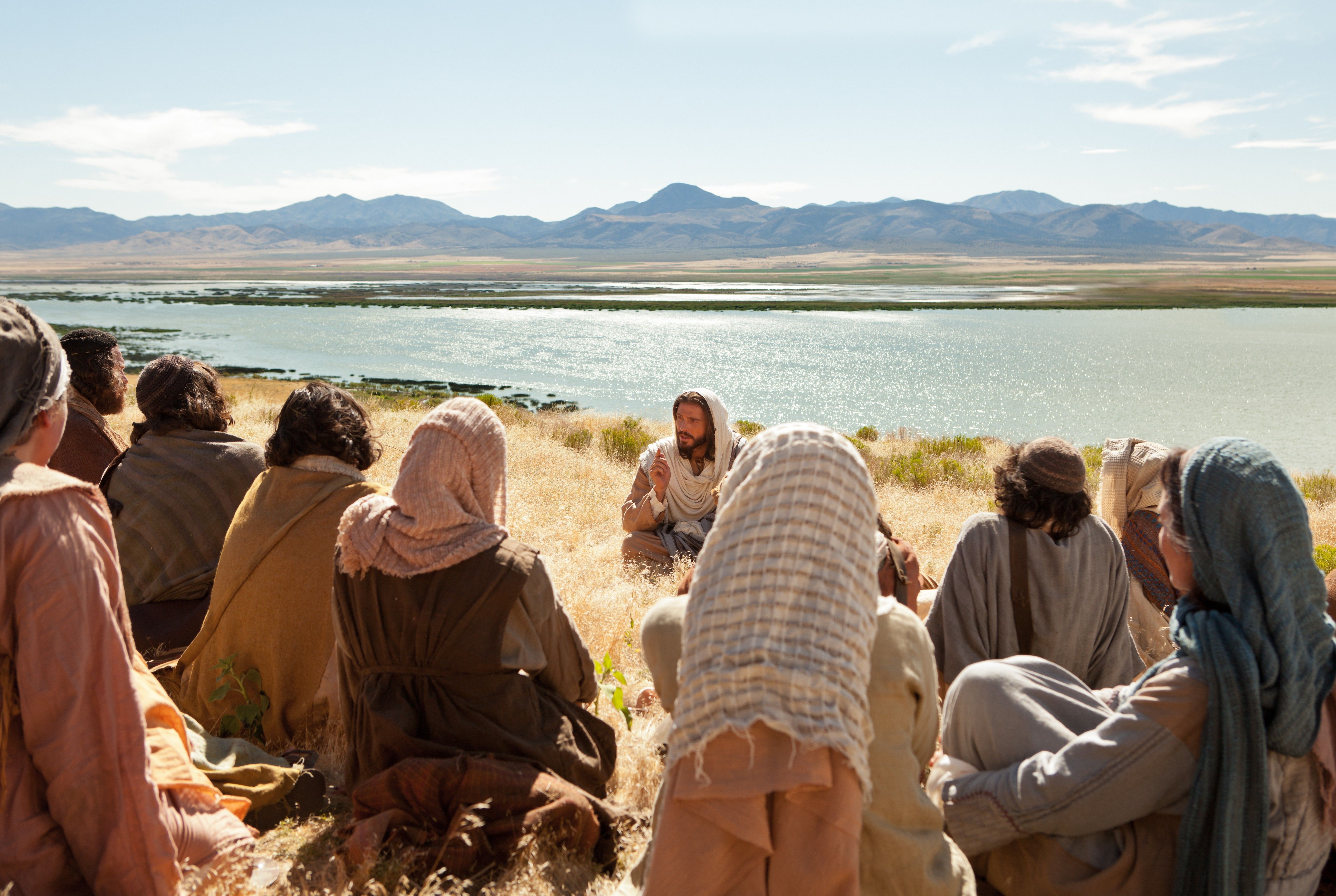
The feeding of the 5,000, as recorded in the Gospels, provides a nice metaphor for teaching in the Church. Jesus and his Apostles retreated to a mountain for solitude but were followed by a multitude of people who wanted to learn at the Savior’s feet. The Savior had compassion on them, recognizing them as sheep without a shepherd, and taught them many things. As the day drew to a close, the question of feeding the multitude became an issue. The Apostles determined that the only food available were five barley loaves and two small fishes, which were had by a little boy—-obviously not enough to feed everyone.
“And Jesus took the loaves; and when he had given thanks, he distributed to the disciples, and the disciples to them that were set down; and likewise of the fishes as much as they would.
“When they were filled, he said unto his disciples, Gather up the fragments that remain, that nothing be lost.
“Therefore they gathered them together, and filled twelve baskets with the fragments of the five barley loaves, which remained over and above unto them that had eaten.”20
What allowed the feeding of the 5,000? Was it the five loaves of a lad who brought and gave all that he probably had? God’s compassionate multiplying of a small boy’s ordinary offering led to the miraculous feasting. Similarly, our offerings as teachers, when aided by compassionate multiplying, result in
divine miracles. As teachers our joint partnership with the Lord makes our simple offerings divine and extraordinary. When we do our best, and rely on Him, He makes up the difference.
Sisters, I testify to you that you do make a difference. Continue to contribute your humble offerings, which include striving to know your sisters, relying on the Spirit, and allowing the sisters to feel the love of the Lord in their lives. Have faith that miracles will happen in your life and in the lives of those you teach.
Thank you for all that you are doing. What you do on Sundays matters! I believe that to the degree our Sunday meetings improve, our sense of belonging to the Church and to the great sisterhood of Relief Society will increase. You can be instruments in the Lord’s hands to bring about His purposes among
His children as you work to strengthen gospel instruction. As we teach, Heavenly Father will multiply and magnify your efforts, in ways perhaps we will never know, to bless the lives of His children.
I testify that no greater responsibility can rest upon you than to be a teacher of God’s children. In the words of President J. Reuben Clark Jr.,
“May [the Lord] give you entrance to the hearts of those you teach and then make you know that as you enter there you stand in holy places.”21
Notes
1. Teaching Guidebook (2001), 1.
2. Church Handbook of Instructions, Book 2: Priesthood and Auxiliary Leaders (1998), 299.
3. See Teaching Guidebook (2001), 1.
4. See Church Handbook of Instructions, Book 2: Priesthood and Auxiliary Leaders (1998), 299.
5. See Information for Priesthood and Auxiliary Leaders on Curriculum 2001 through 2004, 7.
6. Gene R. Cook, in Teaching, No Greater Call A Resource Guide for Gospel Teaching (1999), 41.
7. See Church Handbook of Instructions, Book 2: Priesthood and Auxiliary Leaders (1998), 303.
8. Joseph Smith, Instructions to the Relief Society, in A Legacy Remembered the Relief Society Magazine 1914-1970 (1982), 63.
9. See Church Handbook of Instructions, Book 2: Priesthood and Auxiliary Leaders (1998), 302.
10. See Matthew 25:8, footnoote a: “GR are going out.”
11. See 2 Nephi 33:1.
12. Teachings of Presidents of the Church:David O. McKay (2003), v.
13. See Church Handbook of Instructions, Book 2: Priesthood and Auxiliary Leaders (1998), 198.
14. Mosiah 23:10.
15. Alma 17:9.
16. Church Handbook of Instructions, Book 2: Priesthood and Auxiliary Leaders (1998), 201.
17. See Church Handbook of Instructions, Book 2: Priesthood and Auxiliary Leaders (1998), 305-306.
18. Church Handbook of Instructions, Book 2: Priesthood and Auxiliary Leaders (1998), 197.
19. Gene R. Cook, in Teaching, No Greater Call A Resource Guide for Gospel Teaching (1999), 41.
20. John 6:11-13.
21. The Chartered Course of the Church in Education (1994), 12. |